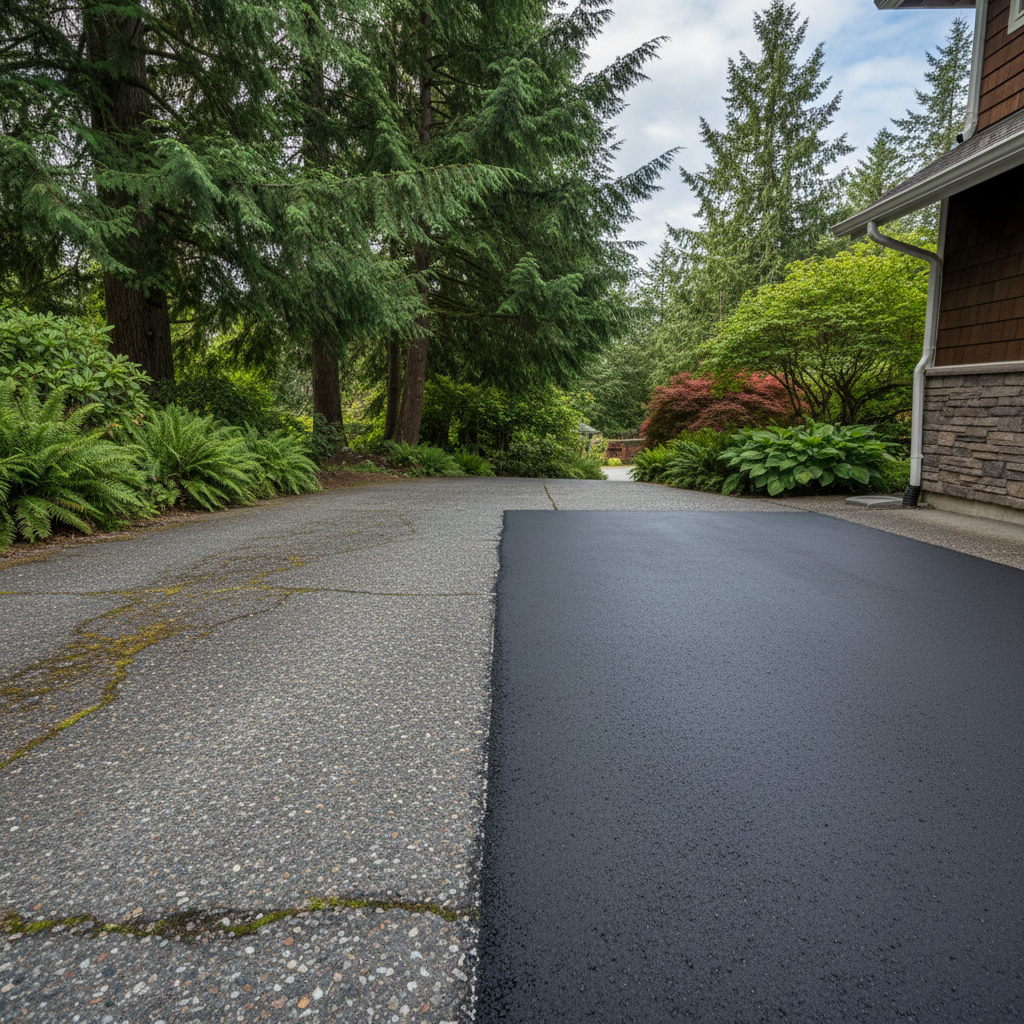
Driveways in Ballard look dark and black when they are properly maintained, while others turn dull and chalky after just one damp winter because of the type of sealcoat used. Property owners choosing between coal tar emulsion and asphalt-based sealer need to know how these materials perform when weather conditions hit Western Washington.
Understanding Your Sealer Choices
Asphalt is a petroleum product, and asphalt is damaged by gas, oil, and standing water. Sealcoating acts as a sacrificial shield against all three. But not all shields are built the same.
Coal tar sealers have been used for a long time. They resist gasoline and oil spills better than almost anything else. If an older truck drips a bit of fluid on a parking pad in Queen Anne, coal tar will not break down easily from the chemical exposure.
Asphalt emulsion sealers are made from refined asphalt base materials. They bind chemically with existing pavement because they share the same material base. They are safer to apply, do not smell as harsh, and have become the standard choice in many regions due to environmental regulations.
How They Handle Seattle Weather
The local climate brings relentless moisture rather than extreme desert heat. Water gets into tiny hairline cracks, expands slightly, and wrecks the pavement base. Homeowners need a product that can handle months of drizzle without lifting.
Asphalt emulsion handles local temperature fluctuations very well. It expands and contracts right along with the pavement. Coal tar can sometimes become brittle over time when exposed to UV rays combined with constant wet cycles in the higher elevations around King County.
Cost and Durability Face-Off
Upfront costs usually favor asphalt emulsion. Coal tar often runs higher because of specialized handling and material sourcing. Durability is a key factor when choosing a product.
- Coal tar typically lasts three to five years under moderate traffic.
- Asphalt emulsion usually needs a refresh every two to three years, especially on steep slopes where water runs off fast and scours the surface.
Oasis Asphalt Paving looks closely at specific property layouts. If a home sits down in a damp hollow where moss grows, the material choice changes compared to a steep, sun-baked driveway in West Seattle.
Appearance and Maintenance
Fresh coal tar dries to a deep, dark charcoal black that makes an older driveway look brand new. It keeps that sharp look for a solid couple of years. Asphalt emulsion starts out dark and rich too, but it tends to weather to a slightly lighter grey quicker under heavy rain.
Maintenance is mostly about keeping the surface clean. Neither sealer will save a driveway that has failing sub-base compaction. If water is pooling near a garage door, property owners need drainage fixes before applying any sealer.
The Bottom Line for Local Homeowners
If maximum chemical resistance is required and the stronger odor during application is not an issue, coal tar holds its ground. But for most residential properties around Puget Sound, modern asphalt emulsion provides superior flexibility and bonds better to local aggregate. It handles damp winters without cracking prematurely, keeping pavement flexible when the ground shifts.
Property owners should look at their driveway's exposure to sun and shade before choosing a product. Oasis Asphalt Paving has sealed driveways from Capitol Hill to Renton and knows what materials last in the local environment.