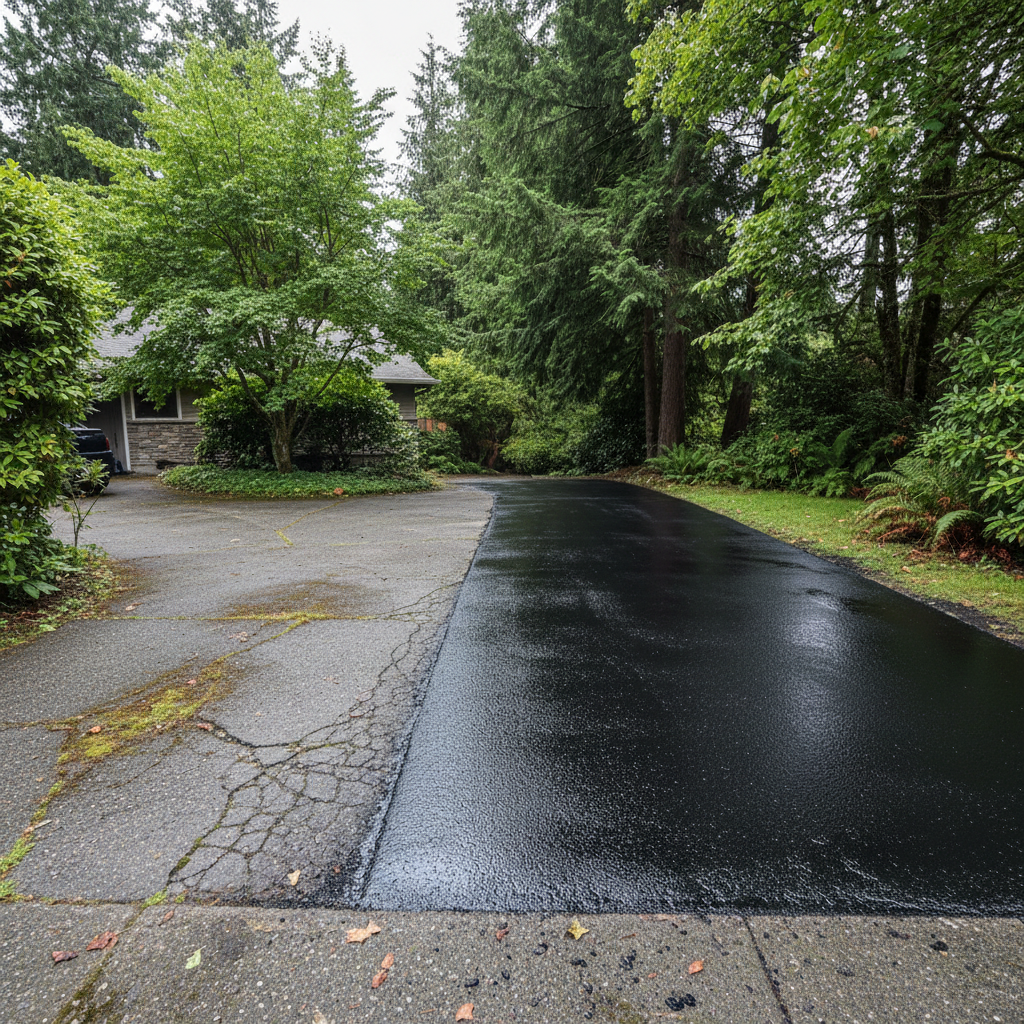
When people watch a crew sealcoat a driveway, they often wonder why one worker uses a massive spray rig while another pushes a broom. If you live around here, our weather does not cut any slack to local pavement. Between the constant dampness in neighborhoods like Ballard and the sudden freeze-thaw cycles we get every winter, picking the right application method for your Asphalt Sealcoating matters just as much as the product itself.
We can break down the two main ways Asphalt Sealcoating gets put down on residential driveways: spray application and brush application. Oasis Asphalt Paving has worked on enough Puget Sound asphalt to see how both hold up after a few solid years of Seattle rain.
Spray Application: Speed and Efficiency
Most commercial contractors lean toward spraying because it is fast. A rig hooks up to a tank, and an operator sweeps a spray wand back and forth across the asphalt. You can cover a standard two-car driveway in no time flat.
- Upfront costs are usually lower because labor hours drop significantly.
- It works great for getting into every tiny pit and hairline crack on a smooth surface during Asphalt Sealcoating.
- If it is not done by someone who really knows what they are doing, overspray can end up all over your siding, garage doors, or car.
- It tends to lay down a thinner coat overall during Asphalt Sealcoating.
Brush Application: Thick and Thorough
Brushing means a crew member uses a large squeegee or stiff-bristled broom to manually push the sealer across the asphalt. Oasis Asphalt Paving finds a lot of homeowners prefer this method once they understand the difference in thickness for Asphalt Sealcoating.
- It physically works the sealer deep into the porous asphalt aggregate during Asphalt Sealcoating.
- You get a much thicker, more durable protective layer that stands up better to studded tires and heavy downpours.
- It takes longer and costs a bit more due to the labor involved in Asphalt Sealcoating.
- Edges are cleaner without needing endless masking tape everywhere.
How They Compare in the Real World
Cost-wise, spraying wins every time on paper. But you have to look at the lifespan of Asphalt Sealcoating. A thin spray coat might need a refresh every two years if your driveway sits on a shady slope that stays wet for months. A properly applied brush coat puts down mils of material that bridge minor surface flaws and resist the constant moisture we deal with from October through May.
Appearance is another thing. Spraying leaves a uniform, slightly textured finish. Brushing can sometimes show minor tool marks if the crew rushes, but a professional hand leaves a rich, deep black matte finish that looks incredible and lasts longer for Asphalt Sealcoating in Seattle.
The Verdict for Local Driveways
If you are trying to stretch a tight budget right before selling a house, a quick spray coat might do the trick. But if you want maximum protection against the relentless Seattle elements and want to stretch your maintenance intervals to three or four years, go with brush-applied Asphalt Sealcoating. It costs a bit more upfront, but your asphalt will thank you when the winter storms roll in.