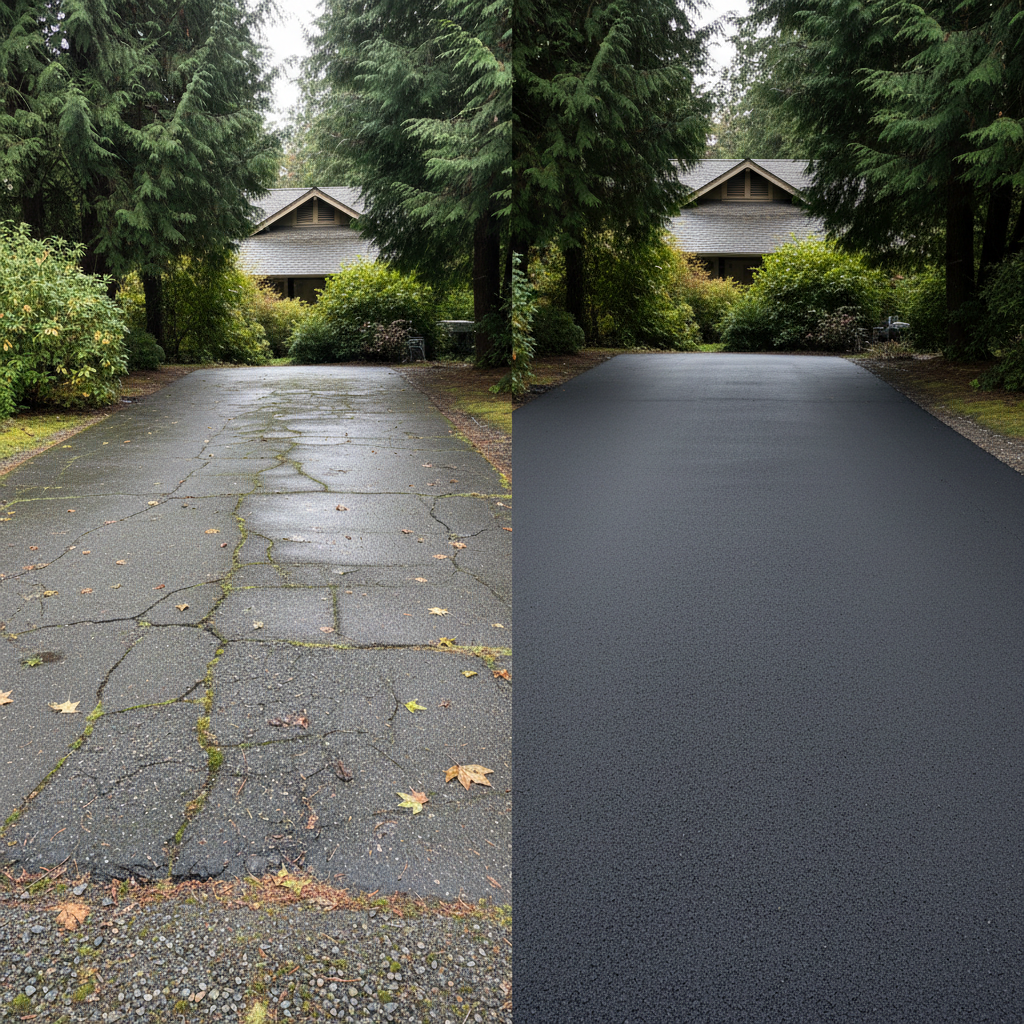
Alright, let's talk driveways. Specifically, commercial asphalt driveways, because even though you're a homeowner, your paved surface needs to stand up to a lot, just like a commercial lot would. When your asphalt starts showing its age – cracks, potholes, fading – you've generally got two main options: an overlay or a full replacement. Folks often ask me, "What's the difference, and which one should I pick for my place here in Seattle?" It's a fair question, and the answer isn't always simple, but I'll lay it out for you.
Asphalt Overlay: The 'New Skin' Approach
Think of an asphalt overlay like putting a new skin over your existing pavement. We're not ripping everything out. Instead, we're repairing the significant damage on the old surface – filling potholes, sealing major cracks – and then laying a fresh layer of hot asphalt directly on top. It's usually about 1.5 to 2 inches thick. It gives your driveway a brand-new look without the extensive demolition and base work.
Pros of an Overlay:
- Cost-Effective: This is usually the big one. Since we're not tearing out the old stuff, you save a good chunk of money on labor, materials, and disposal.
- Quicker Job: Less demolition means less time on site. We can often get an overlay done in a day or two, depending on the size of your driveway.
- Good for Minor Damage: If your existing asphalt is mostly sound with just surface-level issues, an overlay can extend its life significantly.
Cons of an Overlay:
- Doesn't Fix Underlying Issues: This is critical. If your base layer – the gravel and compacted soil underneath the asphalt – is failing, an overlay won't fix that. Those cracks and dips will eventually telegraph through the new surface.
- Shorter Lifespan: While it looks new, an overlay typically lasts 8-15 years. That's good, but not as long as a full replacement.
- Raises Grade: Adding a new layer raises the height of your driveway. This can sometimes create issues with drainage, garage door clearances, or transitions to sidewalks and landscaping. We always check for this beforehand.
Full Asphalt Replacement: Starting Fresh
A full replacement is exactly what it sounds like. We come in, tear out all the old asphalt, excavate the existing base material, and often re-grade and compact a fresh, stable aggregate base. Then, we lay down new asphalt, usually in two layers – a binder course for strength and a surface course for smoothness and appearance. It's a complete do-over.
Pros of a Full Replacement:
- Longest Lifespan: When done right, a full replacement can last 20-30 years, sometimes even longer, especially if you keep up with maintenance.
- Addresses All Issues: This is the best option if you have extensive cracking, severe potholes, drainage problems, or a visibly failing base. We fix everything from the ground up.
- Better Drainage & Grade Control: We can re-establish proper slopes and drainage during the base work, which is super important here in Seattle with all our rain. No more puddles near your garage!
- Strongest Foundation: You get a brand-new, robust foundation that's built to last.
Cons of a Full Replacement:
- Higher Cost: More labor, more materials, more disposal. It's a bigger investment upfront.
- Longer Project Time: Demolition, excavation, base work, and then paving takes more time. Expect several days, maybe even a week, depending on the size and complexity.
- More Disruptive: Tearing out an old driveway is a messy process.
So, Which One's Right for Your Seattle Home?
Here's my honest take. For homeowners in Seattle, with our often clay-heavy soils and consistent rainfall, the condition of your base layer is paramount. If your driveway is just showing some hairline cracks and minor surface wear, and the underlying structure feels solid, an overlay can be a fantastic, cost-effective solution to get another decade or so out of it. It's a great way to spruce things up without breaking the bank.
However, if you're seeing widespread alligator cracking (it looks like alligator skin), significant dips or humps, standing water after a light rain, or potholes that keep coming back even after patching, then you're likely looking at a failing base. In that scenario, an overlay is just a temporary bandage. Those issues will show through the new asphalt, often within a year or two, and you'll be right back where you started, having spent money on a short-term fix.
My recommendation, more often than not, leans towards a full replacement if the base is compromised. It's a bigger investment upfront, sure, but it gives you peace of mind and a durable surface that will handle our Seattle weather – from the constant drizzle to the occasional heavy downpour – for decades. You won't have to worry about it for a very long time. For example, if you're in an older neighborhood like Wedgwood or West Seattle where homes have been around for a while, and the original driveways are pushing 40-50 years, a full replacement is almost always the smarter long-term play.
At Oasis Asphalt Paving, we always start with a thorough inspection. We'll check the base, look for drainage issues, and give you an honest assessment of what we think is the best, most durable solution for your specific situation. We want you to have a driveway that looks good and performs even better, for years to come.